Art Around the World
Mr. Brossman | VA-104
Welcome to Middle Eastern Mosaic Art!
Get ready to explore a tradition that spans over a thousand years, from the glittering tiles of Ottoman mosques to the contemporary mirror mosaics of modern artists. Over the next three lessons, we'll discover how tiny pieces come together to create infinite patterns and powerful meaning.
Unit Overview
What You'll Learn
🕌 Lesson 1
Explore traditional Islamic art from Ottoman times, discover the meaning behind geometric patterns, and learn about Iznik tiles
🎨 Lesson 2
Discover modern Middle Eastern artists who blend traditional techniques with contemporary ideas
✂️ Lesson 3
Practice mosaic techniques using paper shapes before working with real tiles
Key Artists & Traditions
Ottoman Tile Masters
İznik, Turkey, 15th-17th Century
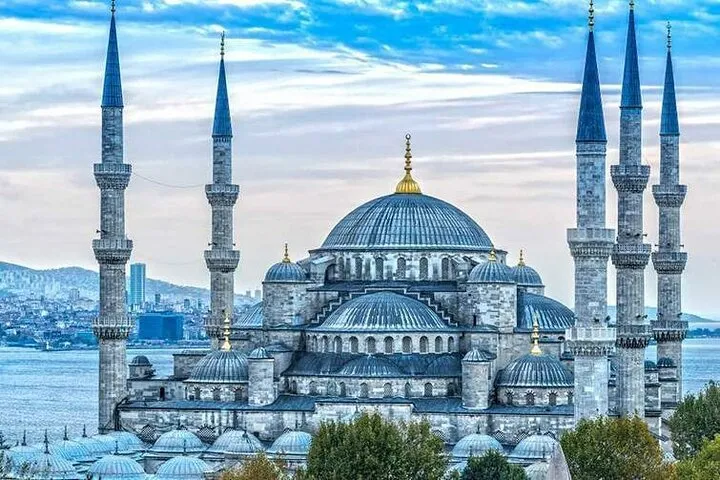
Anonymous artisans who created the legendary blue-and-white tiles adorning the Blue Mosque and Topkapi Palace, their secrets passed down through generations.
Monir Shahroudy Farmanfarmaian
Iranian, 1922-2019
Contemporary artist who transformed traditional Persian mirror mosaic techniques into stunning geometric sculptures that bridge East and West.
Shirin Neshat
Iranian, b. 1957
Internationally acclaimed artist known for powerful photography and film exploring themes of identity, gender, and cultural heritage.
Middle Eastern Mosaic Timeline
🌍 Cultural Connection
In this unit, we're learning FROM Middle Eastern art traditions, not copying them. We'll understand the cultural and spiritual significance behind geometric patterns, then create our own personal interpretations that honor these traditions while expressing our individual identities.
The Infinity of Geometry
Think About It: In Islamic tradition, artists rarely depicted human or animal figures in religious spaces. Instead, they developed something extraordinary – complex geometric patterns that represent the infinite nature of creation. How can simple shapes like circles, squares, and triangles communicate something as vast as infinity?
🚫 Aniconism in Islamic Art
Aniconism is the term used to describe the absence of material representations of the natural and supernatural world—specifically the avoidance of images of sentient beings like humans and animals.
In Islamic art, this practice stems from the belief that the creation of living forms is God's unique prerogative, and depicting them could lead to idolatry (shirk). Because of aniconism, Islamic artists developed the sophisticated alternative traditions mentioned in the video:
- Geometric patterns: To encourage contemplation of eternal order.
- Arabesque: Intricate, flowing vegetal or floral designs.
- Calligraphy: Artistic writing of the Quran.
Today we'll discover why the most stunning Islamic Middle Eastern art in the world are designed in mind-bending patterns. We'll explore how mathematics, spirituality, and artistry combined to create some of humanity's most beautiful art.
Historical Context: The Ottoman Empire
Imagine Istanbul in the 1550s. The Ottoman Empire spans three continents, and Sultan Süleyman the Magnificent wants architecture that reflects this power. He commissions the legendary architect Sinan to build mosques that will inspire awe for centuries. The secret weapon? Tiles from the workshops of İznik.
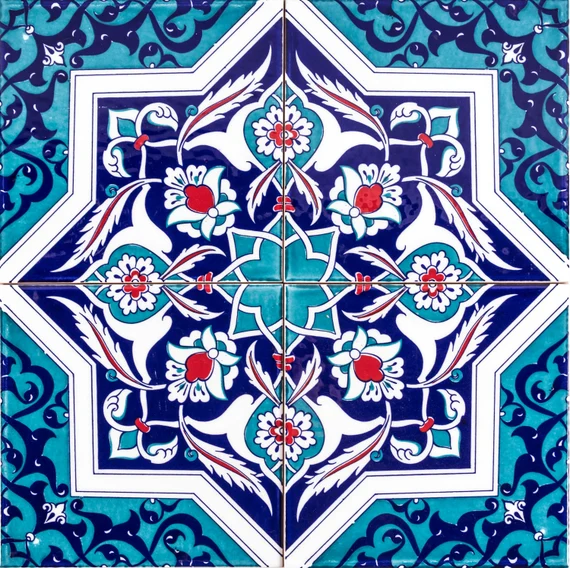
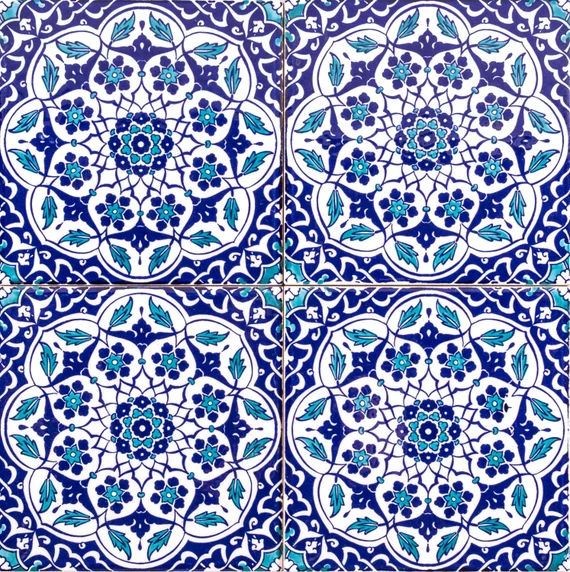
🔷 İznik Tiles
Turkish tiles made with 85% quartz, creating brilliant white backgrounds and vibrant colors that never fade
The Blue Mosque: 20,000 Tiles of Wonder
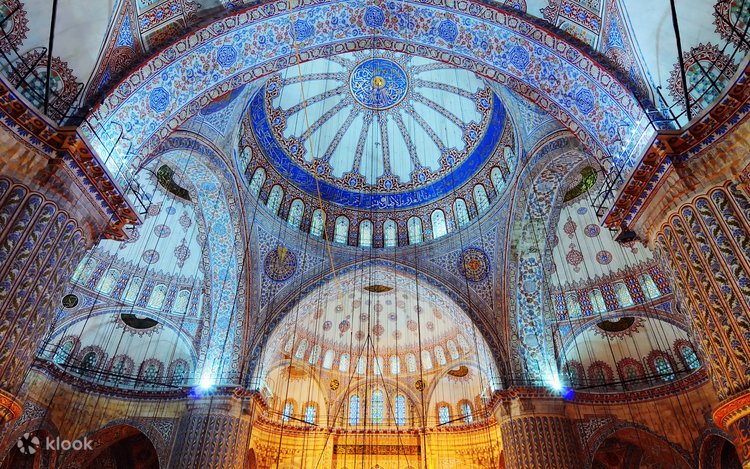
The Sultan Ahmed Mosque in Istanbul (nicknamed the "Blue Mosque") contains over 20,000 handmade İznik tiles. Each tile was shaped from quartz-rich clay, painted by hand with intricate designs, and fired in kilns at precise temperatures. The secrets of these techniques were passed down orally – and were eventually lost for over 300 years!
🔵 Cobalt Blue
The signature color, derived from cobalt oxide, symbolizing heaven and spirituality
🌷 Tulips & Carnations
Floral motifs representing paradise gardens and the natural world
🔴 "İznik Red"
A legendary raised-slip technique creating 3D coral-red designs – the formula was lost and only recently rediscovered
✍️ Calligraphy
Arabic script as visual art, transforming sacred words into decorative borders and medallions
The Mathematics of Islamic Pattern
Islamic geometric patterns aren't random – they're built on mathematical principles. Starting from a circle, artists construct increasingly complex designs using only a compass and straightedge.
Watch: The Complex Geometry of Islamic Design
TED-Ed: Eric Broug explains how Islamic patterns are created
The four basic "repeat units" are:
📓 Lesson 1 Sketchbook Assignment: Islamic Geometry Video Response
After watching "The Complex Geometry of Islamic Design," test your knowledge below. Click on the question to see the answer.
Part A: Video Notes & Key Concepts
Part B: Symmetry Analysis
- Find online 2-3 different Islamic geometric patterns (search online for "Islamic geometric pattern" or "zellige pattern")
- Glue them in your sketchbook
- For EACH pattern, determine if it's four-fold, five-fold, or six-fold symmetry
- Circle or highlight the "star" or "petal" shapes you counted to figure it out
- Label each pattern with its symmetry type
Part C: Create Your Own Pattern
- Using a compass and ruler, follow the video's method to create your own geometric pattern
- Start with a circle inside a square
- Divide the circle into 6 OR 8 equal parts
- Draw construction lines connecting different points
- Choose segments to create your repeating unit
- Show at least 4 repetitions of your pattern (tessellation)
- Color your design using the traditional palette: cobalt blue, turquoise, white, and accents of red or green
Part D: Reflection
Answer the following in your sketchbook:
- The video mentions that this tradition developed during the "golden age of Islamic culture" when there were major advancements in science and mathematics. How do you see the connection between math and art in these patterns?
- The video says these patterns inspire "wonder and contemplation of eternal order." What does it feel like to look at a pattern that could theoretically repeat infinitely?
- Were you surprised that such complex designs come from just a compass and ruler? Why or why not?
From Tradition to Innovation
Think About It: How can artists honor ancient traditions while making something completely new? What happens when centuries-old techniques meet contemporary ideas about identity, politics, and personal expression?
Today we'll meet artists who grew up surrounded by Islamic patterns and mosaic traditions – and transformed them into powerful contemporary art that speaks to our modern world.
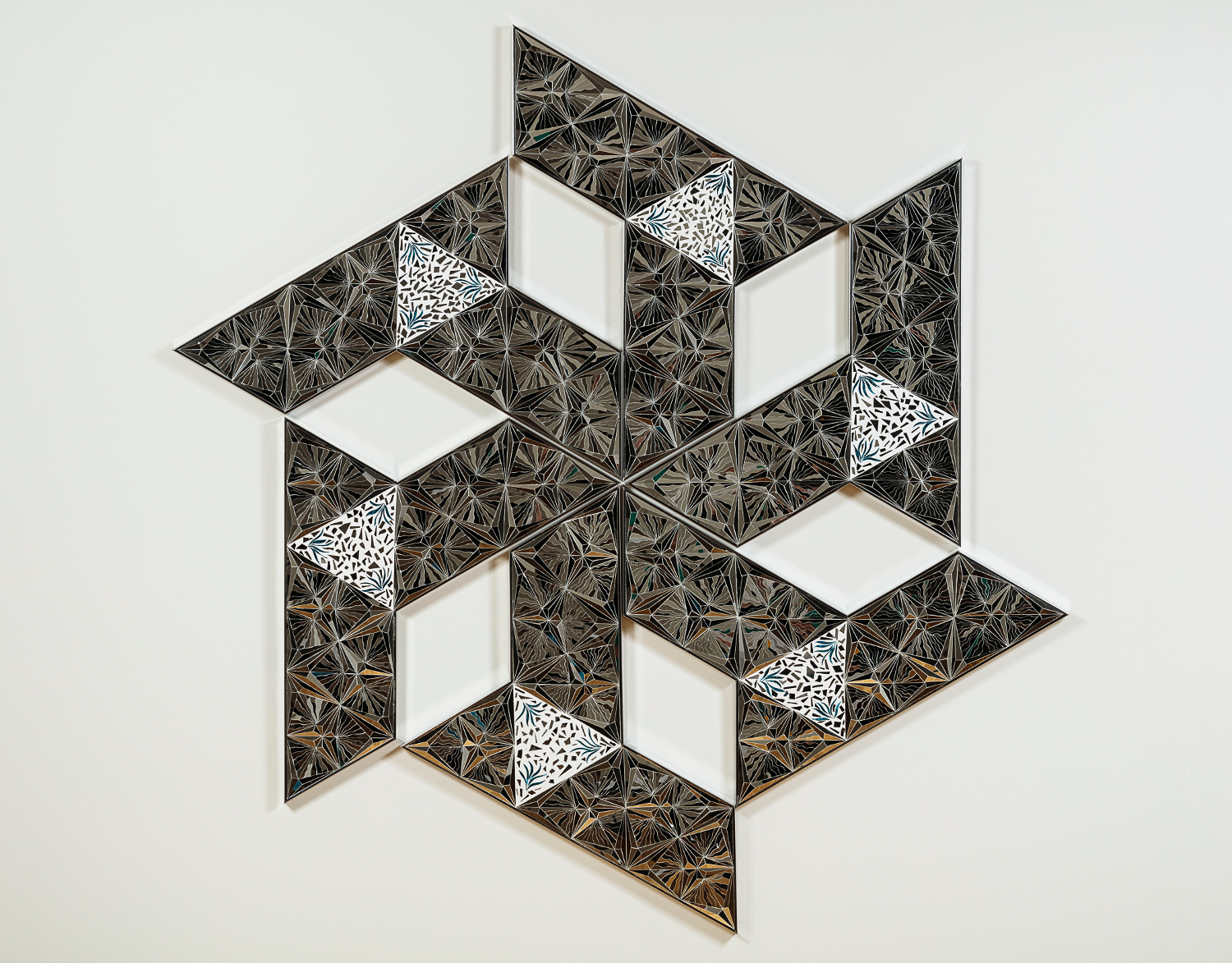
Spotlight: Monir Shahroudy Farmanfarmaian (1922-2019)
Monir was born in the ancient Persian city of Qazvin, Iran. She moved to New York in the 1940s, befriended artists like Andy Warhol and Joan Mitchell, then returned to Iran where she discovered something that would change her art forever.
"The very space seemed on fire, the lamps blazing in hundreds of thousands of reflections... I imagined myself standing inside a many-faceted diamond and looking out at the sun."
– Monir Farmanfarmaian, describing her visit to the Shah Cheragh mosque in Shiraz
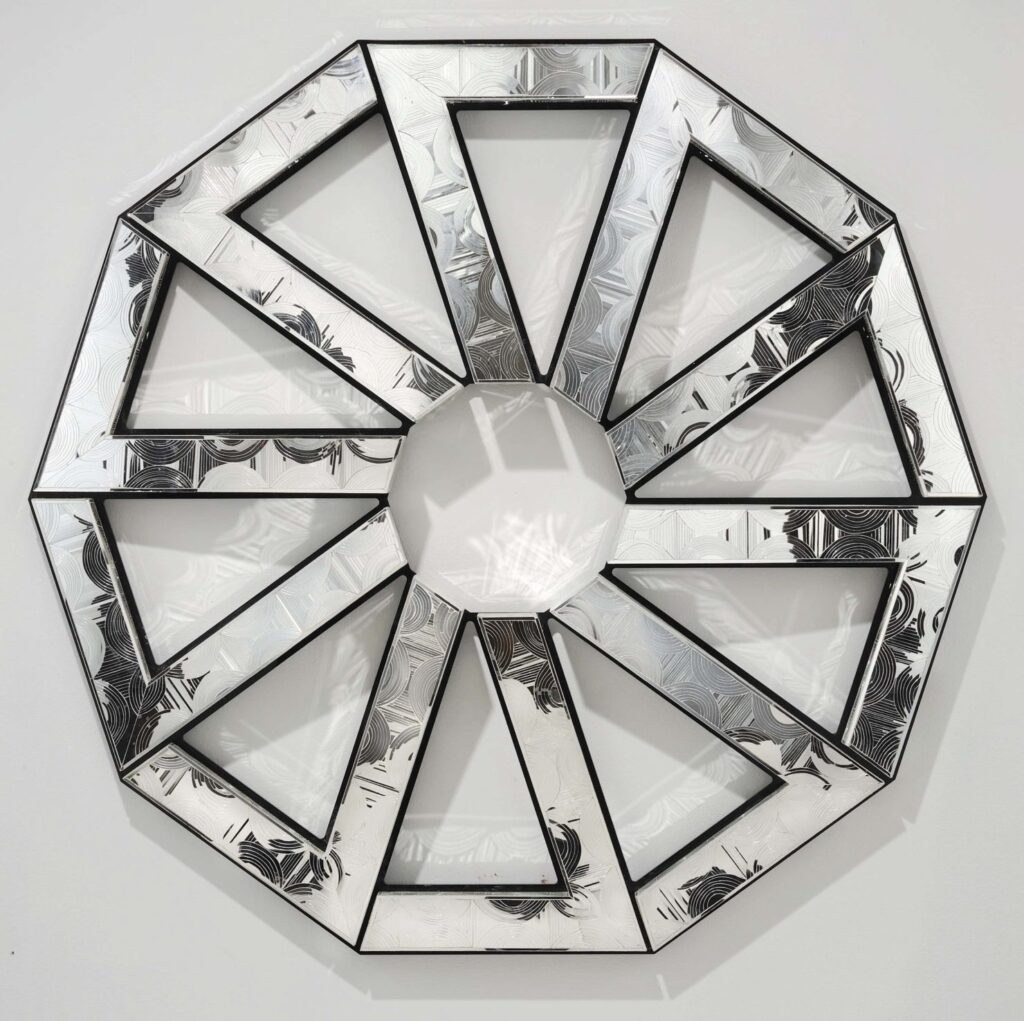
That visit to a mirror-covered shrine inspired her to learn Ayeneh Kari, the traditional Persian art of cutting mirrors into geometric shapes and embedding them in plaster. But Monir didn't just copy tradition – she transformed it, creating sculptures that look like they belong in both ancient palaces and modern museums.
🪞 Mirror Mosaics
Monir worked with master craftsmen to cut mirrors into triangles, hexagons, and other shapes, then arranged them into kaleidoscopic compositions
🔮 Reflection as Meaning
When you look at her work, you see yourself fragmented and multiplied – becoming part of the infinite pattern
🌍 Bridging Worlds
Her work was shown at the Guggenheim Museum – she was the first Iranian artist to have a solo show there
More Contemporary Middle Eastern Artists
Shirin Neshat
Iranian, b. 1957
Creates powerful black-and-white photographs featuring Persian calligraphy written on skin, exploring themes of gender, identity, and exile.
Ahmed Mater
Saudi Arabian, b. 1979
Former medical student turned artist. His "Magnetism" series shows iron filings around magnets, symbolizing the spiritual pull of Mecca.
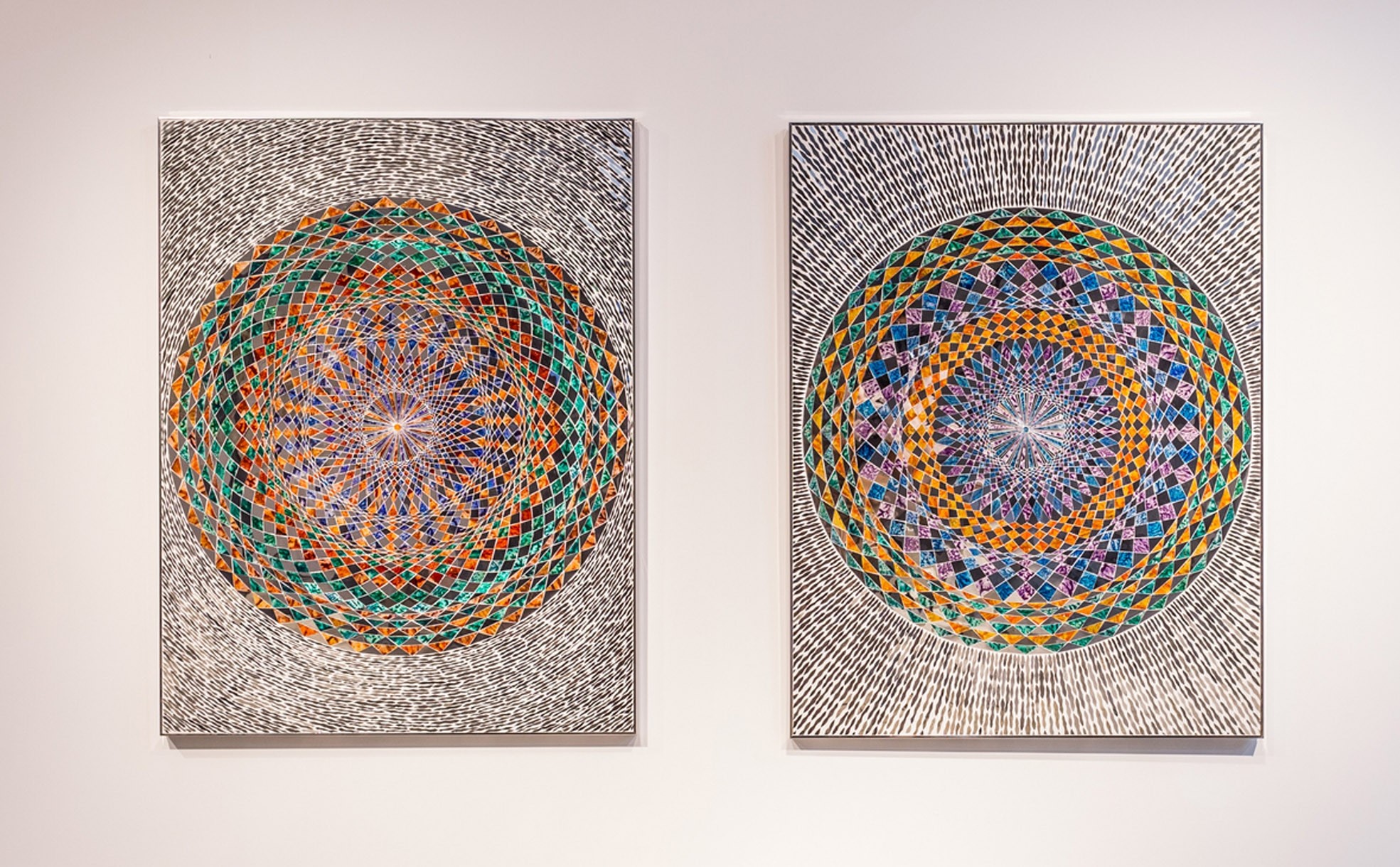
Hadieh Shafie
Iranian-American, b. 1969
Creates mosaic-like sculptures from thousands of tightly rolled paper scrolls inscribed with Persian poetry about love and loss.
Themes in Contemporary Middle Eastern Art
Identity & Belonging
Many artists explore what it means to be from the Middle East in a global world – navigating between traditional heritage and contemporary life, often while living in exile.
Sacred & Secular
Traditional Islamic art was primarily religious. Contemporary artists use the same techniques to explore personal spirituality, politics, and everyday life.
Memory & Loss
Themes of displacement, cultural heritage, and what gets lost (and preserved) across generations appear throughout modern Middle Eastern art.
Material Innovation
Traditional materials meet new media: paper scrolls, photography, video, found objects, and digital technology join glass, tile, and mirror.
Themes in Contemporary Mosaic Art
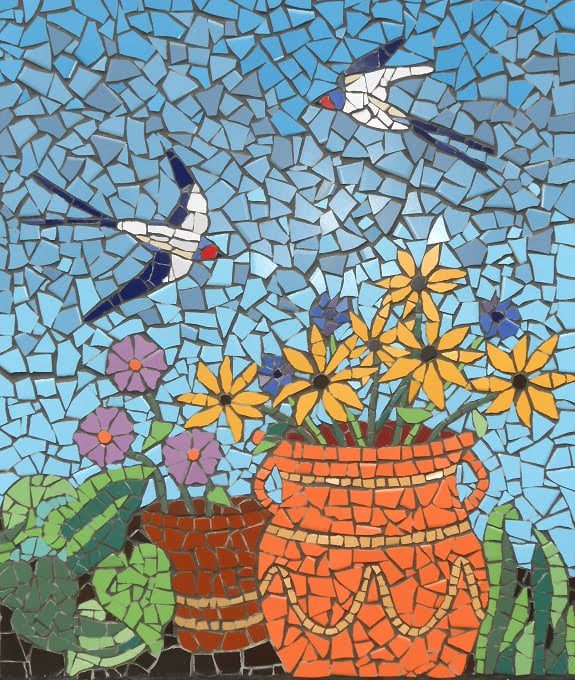
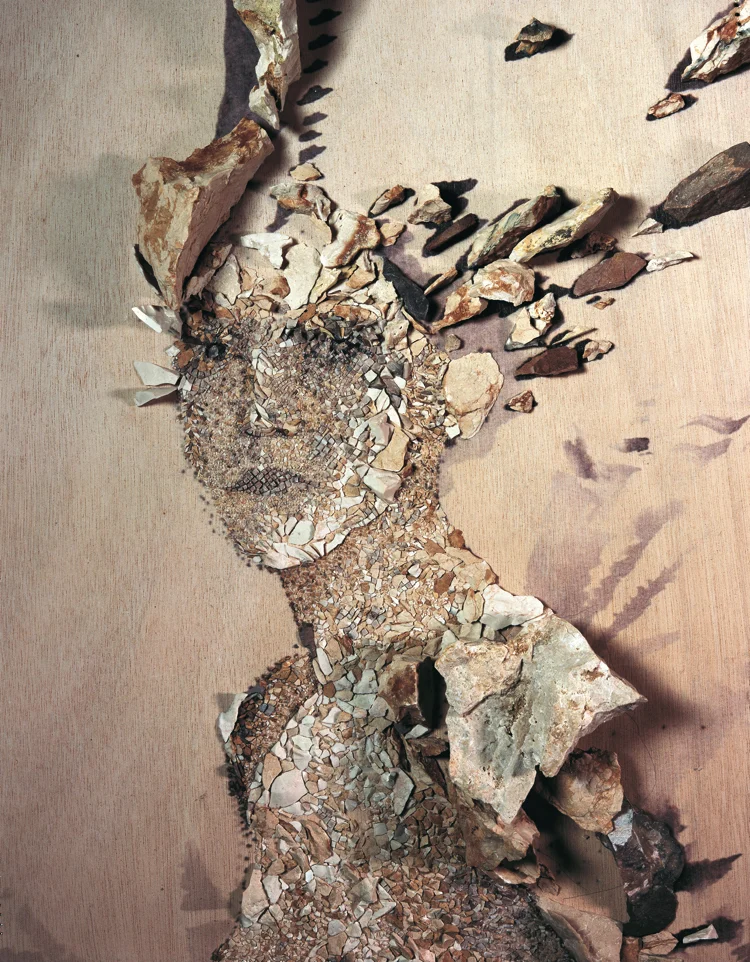
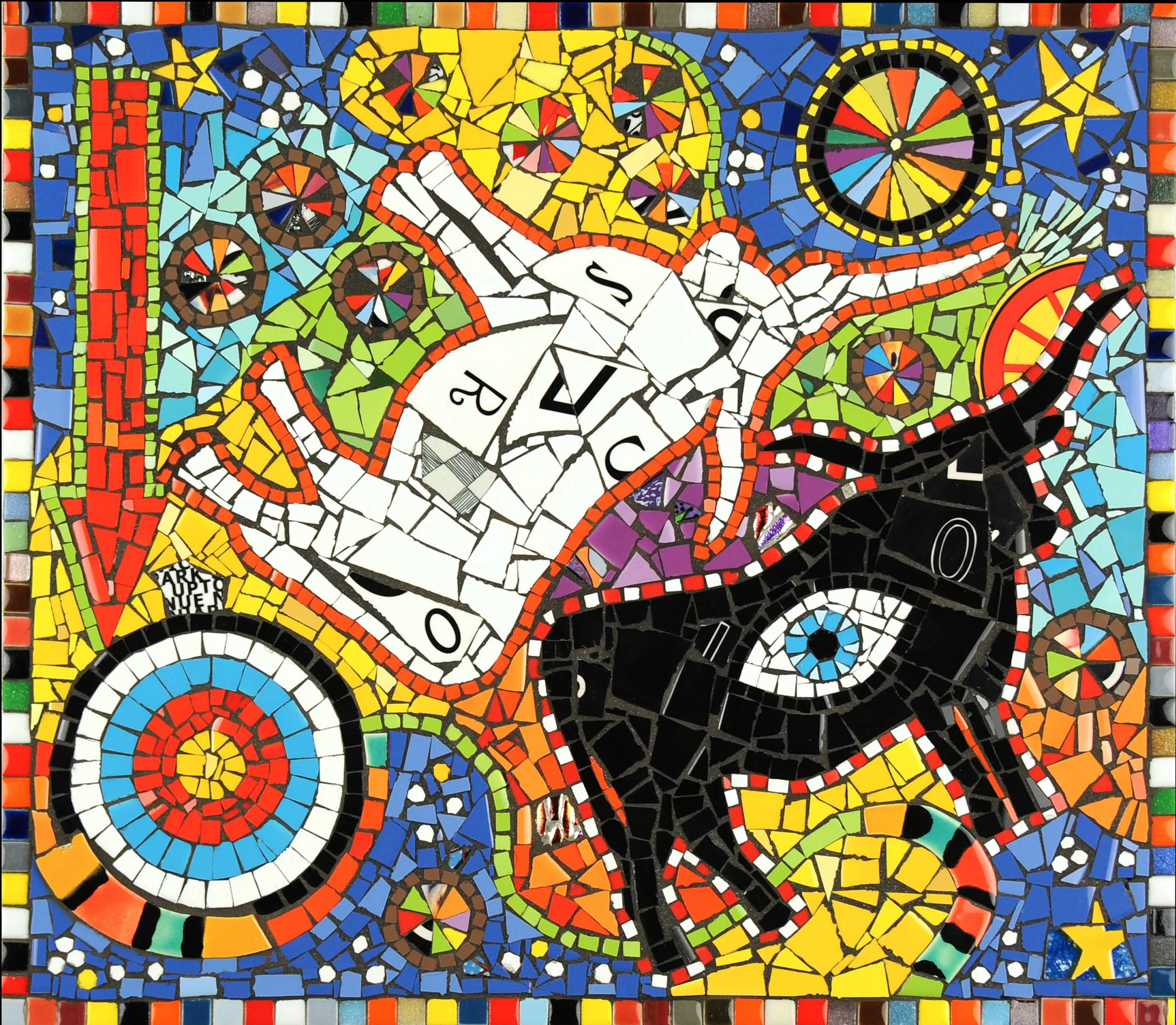
Mosaic art extends far beyond any single cultural tradition. Artists around the world use the mosaic technique to express personal stories, emotions, and ideas. While we're learning from Middle Eastern geometric traditions, your final project can draw on any theme that's meaningful to you.
Personal Narrative
Many contemporary mosaic artists use the medium to tell their own stories – memories, experiences, relationships, and journeys that have shaped who they are.
Nature & Environment
From landscapes to animals to abstract interpretations of natural forms, the mosaic medium brings texture and depth to representations of the natural world.
Emotion & Expression
Color, pattern, and the fragmented nature of mosaic can powerfully convey feelings – joy, struggle, hope, or transformation.
Cultural Heritage
Artists often incorporate symbols, patterns, or imagery from their own backgrounds – whatever culture, community, or family tradition is meaningful to them.
Here are examples of contemporary mosaic work showing the range of personal expression possible with this medium:
🎨 Your Project
Your final mosaic will be inspired by the geometric principles and techniques we've studied from Middle Eastern traditions, but the subject matter and meaning are entirely up to you. Use what you've learned about pattern, color, and composition to express something personal.
📓 Lesson 2 Sketchbook Assignment: Artist Study & Personal Connection
Part A: Deep Dive
- Choose ONE contemporary Middle Eastern artist to research (Monir Farmanfarmaian, Shirin Neshat, Ahmed Mater, Hadieh Shafie, or another approved artist)
- Find 2-3 images of their work and glue/sketch/download them in your sketchbook or Class Notes in OneNote
- Write a sentence or two what you like about the artist's work
Part B: Analysis - Things to think about
- How does this artist connect to traditional Middle Eastern art techniques?
- What contemporary themes do they explore?
- What materials do they use and why?
Part C: Personal Mosaic Brainstorm
- Start brainstorming ideas for YOUR mosaic project
- What image, symbol, or pattern is meaningful to YOU?
- Sketch 3 different ideas – they can be abstract patterns, symbols, or images
- Consider: What story do you want your mosaic to tell?
💡 Key Insight
Notice how contemporary artists don't just copy traditional patterns – they use traditional TECHNIQUES to express their own ideas, identities, and experiences. That's exactly what we'll do with our final mosaic project: learn the craft, then make it personal.
Discussion Questions
- Why do you think so many contemporary Middle Eastern artists are interested in themes of identity and belonging?
- How is using mirror in artwork different from using opaque tiles? What does it mean when you can see yourself in the art?
From Paper to Tile
Think About It: Professional mosaic artists spend years mastering their craft. Traditional artisans cut each tiny piece (called a tessera) by hand. Today, we'll practice the essential skills using paper before moving to real glass tiles. Why do you think practicing with paper first is important?
Before working with glass mosaic tiles, we'll practice cutting, arranging, and planning our designs using colored paper. This lets us make mistakes, experiment, and learn the principles of mosaic design without wasting materials!
Understanding Your Tile Shapes
Your final project will use Lanyani Mixed Glass Mosaic Tiles. These tiles come in four shapes, each 3/8 inch (about 1 cm) in size:
◆ Diamond
Perfect for creating star patterns, borders, and adding dynamic angles to your design
■ Square
The most versatile shape – great for backgrounds, grids, and filling large areas
▲ Triangle
Creates movement and energy; use for corners, transitions, and geometric patterns
▬ Rectangle
Excellent for borders, linear elements, and creating flow in your composition
Mosaic Vocabulary: Andamento & Opus
Professional mosaic artists use specific terms to describe how tiles flow and are arranged:
Design Principles for Mosaic
Keep It Simple
With 3/8" tiles, detailed images become muddy. Bold, simple shapes work best. Think about icons and symbols, not photographs.
Plan Your Gaps
The spaces between tiles (where grout goes) are part of your design! Consistent spacing creates a professional look.
Consider Contrast
Dark tiles against light, warm colors against cool – contrast helps your image "read" from a distance.
Think in Shapes
Break complex images into simple geometric zones. Each zone can be a different color or tile pattern.
Full Coverage vs. Partial Coverage
For your final project, you can choose between two approaches:
🔲 Full Coverage
Tiles cover the ENTIRE 10x10" plywood surface. More tiles, more time, but creates a classic mosaic look.
- Traditional mosaic appearance
- Requires careful planning
- All texture, all tile
🎨 Partial Coverage
Central image made of tiles + border of tiles, with the remaining area painted with acrylic. Creates contrast between smooth and textured.
- Mixed media effect
- Less tiles needed
- Paint adds color flexibility
📓 Lesson 3 Assignment: Pattern to Tile Translation
In this exercise, you'll design a geometric pattern using the Geometric Pattern Maker App and then figure out how to recreate it using real glass tiles. This is your chance to work out the design BEFORE your final project – no gluing, no permanent decisions, just experimenting!
Materials Needed:
- Access to the Geometric Pattern Maker App
- Glass mosaic tiles (3/8" size) – squares, triangles, diamonds, and rectangles
- Flat work surface for arranging tiles
- Phone/camera for documenting your final pattern
- Sketchbook for reflection
Step-by-Step Instructions:
Open the Geometric Pattern Maker App. In the Tessellation section, select the 1x1 grid option. Experiment with different geometric designs until you create a pattern you like. This will be ONE repeating unit – not a full tessellation yet.
Once you have a pattern you're happy with, take a screenshot or save the image. Print it out or keep it visible on your device as a reference.
Using the glass tiles, try to recreate your pattern. You have four tile shapes to work with: squares, triangles, diamonds, and rectangles (all 3/8" size). Arrange the tiles on your work surface – DO NOT GLUE. The goal is to match your app design as closely as possible using the available shapes.
Your app pattern may not translate perfectly to the tile shapes available. That's okay! Adjust your design as needed. Try different combinations. The point is to figure out what works BEFORE your final project so you're not struggling later.
When you have a pattern that works with the tiles AND that you like, take a photo. This is the geometric pattern you'll incorporate into your final mosaic project. Glue or tape the photo into your sketchbook.
Important: Final Project Requirement
The geometric pattern you create in this exercise must appear somewhere in your final mosaic project. You can place it in the center, use it as a border, or incorporate it however you choose – but it needs to be included at least once. The rest of your final piece is up to you!
Reflection Questions (answer in sketchbook):
- How closely does your tile version match your original app design? What changes did you have to make?
- Which tile shape was most useful for your pattern? Which was hardest to incorporate?
- Where do you plan to place this pattern in your final mosaic?
- What did you learn from this exercise that will help you during the final project?
🎨 Coming Next: Glass Mosaic Final Project!
You've learned the HISTORY and MEANING of Middle Eastern mosaic traditions, studied contemporary artists who've reimagined these techniques, and designed your own geometric pattern. Now you're ready to create your own mosaic-inspired artwork using real glass tiles – with your pattern as a required element!
Resources & Support
Final Project Materials
Your Mosaic Kit Includes:
- Lanyani Mixed Glass Mosaic Tiles – Diamond, square, triangle, and rectangle shapes (3/8")
- 10x10" Plywood Sheet – Your mosaic base
- Aleene's Original Tacky Glue – For adhering tiles to wood
- Grout – To fill gaps between tiles (applied after glue dries)
- Acrylic Paint – For partial coverage designs
Key Vocabulary
Cultural Context Reminders
Appreciation vs. Appropriation
We are learning FROM Middle Eastern mosaic traditions, not claiming them as our own. We acknowledge that Islamic geometric art has deep spiritual significance – representing the infinite nature of creation and the unity of all things. Our projects are inspired by these traditions while expressing our own personal identities and stories.
Additional Learning Resources
Assessment Criteria
You will be assessed on:
- Completion and thoughtfulness of sketchbook assignments
- Demonstrated understanding of Islamic geometric principles
- Respectful engagement with cultural traditions
- Quality of paper mosaic practice piece
- Participation in discussions and critiques
- Final mosaic project (craftsmanship, design, artist statement)